
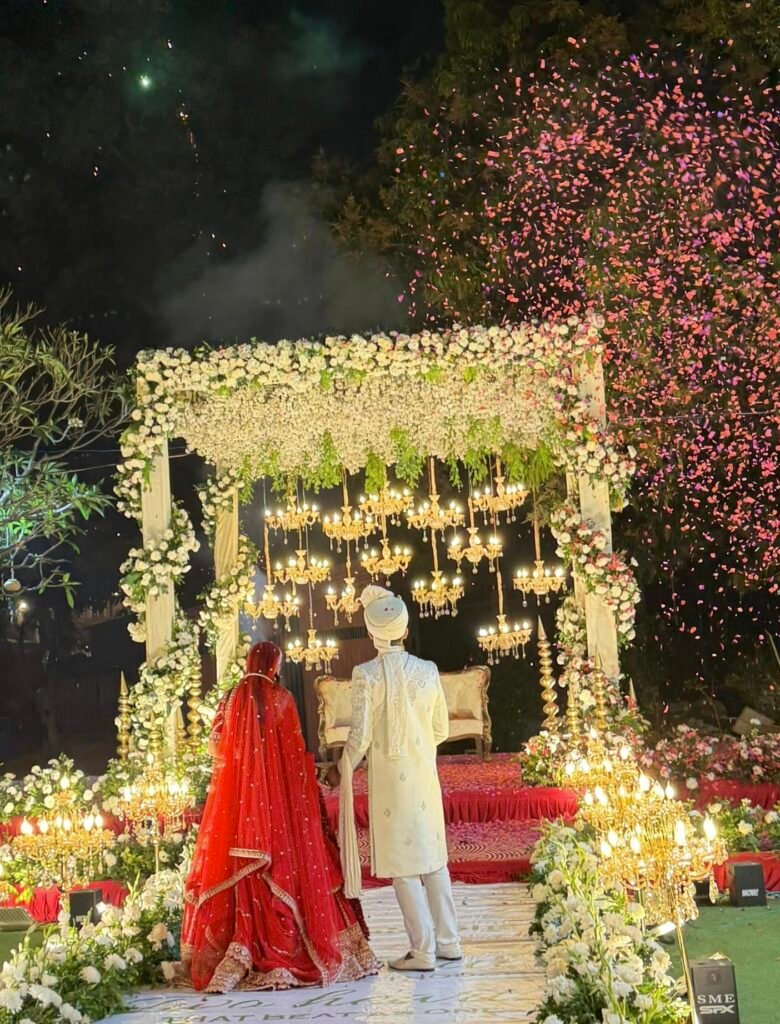
The month of November has always felt heartwarming to me. I usually love it for the change in weather, the onset of mild winter (though I’m not really a winter person), the hot chocolate season, and everything that comes with it. But this November was special in a different way, two of my sisters (one biological and one chosen) and my brother got married. Since childhood, I have loved weddings. My cousins and I would run around endlessly, play games, eat far too much food, wear new clothes, and race to get clicked by the photographer, all without the burden of homework or school. The sense of freedom I felt during those days is unmatched even now. I still remember when my eldest cousin got married and how excited we all were that Bhabhi was coming home. We visited her every day, cracked every joke we knew, showed off my dance skills, and did everything possible to make her feel welcome. As a child, I had no understanding of the institution of marriage, but I knew one thing clearly: she had left her home to be with us, and she might be missing her family. So it felt like our responsibility to make her feel at home in every way we could, even if that meant my endless dancing and lame jokes. I loved watching the couple’s photo shoots and never missed a chance to be there. The couple would often stand awkwardly, with serious faces and missing smiles. I used to wonder why they weren’t smiling. A wedding is supposed to be a happy occasion, I thought. Big smiles were essential; otherwise, the pictures would be ruined. I worried about their photographs more than they did themselves.
Now that I am an adult, my friends and cousins have started getting married too. I still love weddings just as much, but my perspective has changed. I now look at marriage not just as a celebration, but as an institution, one that is deeply biased against women. I see how big a commitment it is to leave one’s home and begin life in an entirely new household, with a completely new family. My elder sister got married in early November, and my other sister in late November. I was genuinely happy for both of them. Seeing them begin a new chapter with their partners filled me with joy. Yet, after their weddings, I sensed a shift, a shift from being daughters to becoming ‘Bahus’ (daughters-in-law). Something about them felt different. They were still the same women, but the world had begun to see them differently. I will explain how.
My elder sister has always been my shield. She is only two years older than me, yet she has played the role of a mother in my life in ways I did not fully understand until much later. I still remember the day I left home, how her words of wisdom steadied me, how she made me believe I would get through anything. As the eldest daughter, she has sacrificed quietly and consistently, often putting everyone else before herself. She even challenged my mother’s perspectives, gently pushing them to adapt to more modern ways of thinking. Like most sisters, we fought often. Yet there was one thing I was never uncertain about how she would always be there for me. When her marriage was fixed, I noticed a look on her face I had seen on many women before, especially in arranged marriages. It wasn’t unhappiness. It was something more complex. Beneath the smiles were questions. How will I live away from my family? Will I be able to meet everyone’s expectations? Will I be a “good” bahu? We were worried too. I felt everything she felt, the excitement, nervousness, sadness, stress, sometimes all at once. It was the first wedding in our family, and none of us were prepared for the weight of emotions it brought with it, the fear of judgment, and above all, the reality of leaving everything behind to begin life anew. When she left, I saw her leaving with a smile on her face, controlling her tears, typical elder daughter behavior. The moment was hers, but still she thought about all of us. I remember that moment from the entire wedding the most, her smile with teary eyes, leaving, a watershed moment which marked a line that she is not ours anymore. She won’t be known by our name anymore. She is someone else’s to be taken care of; she was someone else’s responsibility.
A few months before the wedding, we had a small argument about buying furniture for the house. She was against it; I wanted to go ahead. Almost casually, she said, “Buy whatever you want. I’m not going to live here anyway.” The sentence pierced me. I fought with her over it. She tried to comfort me, assuring me that she would always be equally ours. But during her vidai, I found myself questioning that promise. Would she really be equally ours? And even if she wouldn’t be, I hoped, more than anything, that she would not suffer while accepting this shift. Through this entire process, I realised how deeply painful marriage can be, not only for the woman who leaves, but for the family she leaves behind. My grandmother cried for hours when my sister left the second time. Watching her, I found myself asking a question I still don’t have an answer to: how did society come to normalise a tradition of Girls leaving their homes that hurts everyone involved?
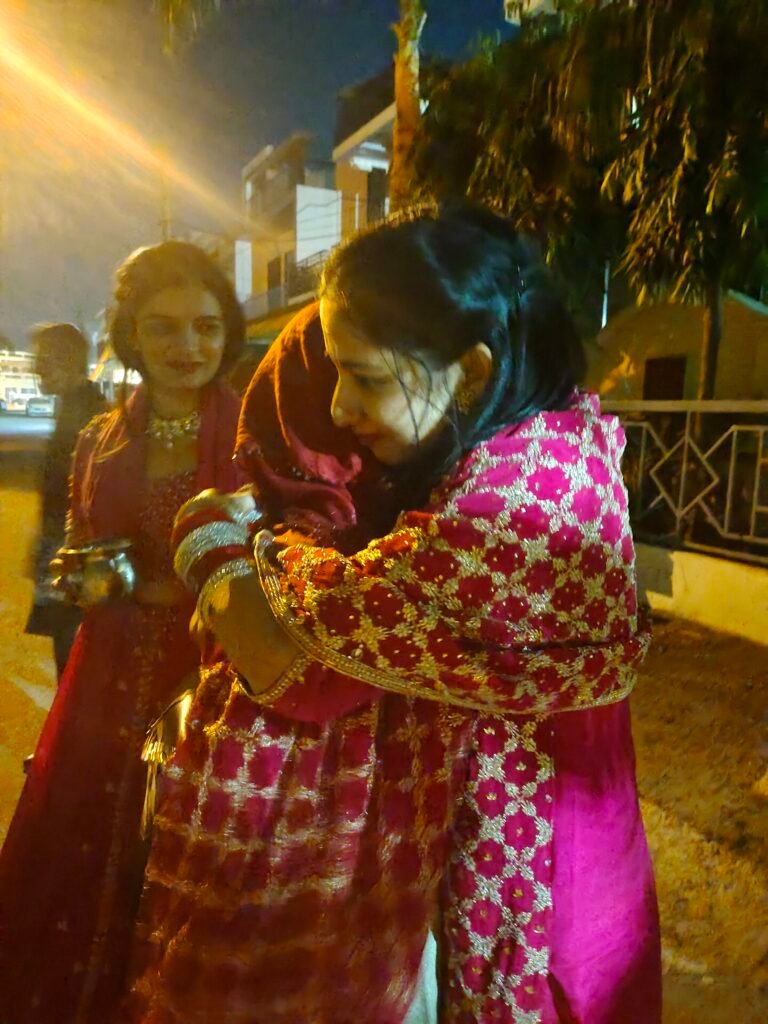
My chosen sister, Kajal, and I have known each other since we were five. From exchanging handmade New Year greeting cards as children to giving each other wedding gifts as adults, we have come a long way. Somewhere along the years, we found sisterhood in each other. During high school, we met almost every day. Then college came, and life slowly took us in different directions. I moved away from home eleven years ago. Whenever life felt overwhelming, I would run back home. And apart from family, Kajal has always been home for me.I rarely told her everything that troubled me, not wanting to burden her. But somehow she always understood. Her small gestures had a way of melting my heart. Sometimes all it took was one cup of chai with her, and everything felt lighter. We have grown up together, sharing moments of laughter and tears, watching each other navigate life step by step. As girls, I don’t think any of us are ever fully ready for marriage in the beginning. When Kajal’s marriage was fixed, of course, everyone in her family was happy. They saw the smile on her face. But I saw something more than that. I saw an elder daughter making a quiet, difficult choice for her family’s happiness, even if it meant leaving them behind to build a life somewhere else. Kajal has always been a kind soul, the kind of daughter who rarely puts her own happiness first. Perhaps that is something many elder daughters learn early: to think of everyone else before themselves. On her wedding day, she dressed excitedly for every function and danced with joy. Yet, almost every time, she ended the functions in tears. While she was excited to begin a new chapter, her heart ached at the thought of leaving her home behind. Watching her, I felt a mix of pride and ache. A few months before the wedding, I remember telling her something very simple: that she was very brave and that she was taking a bold step in her life.
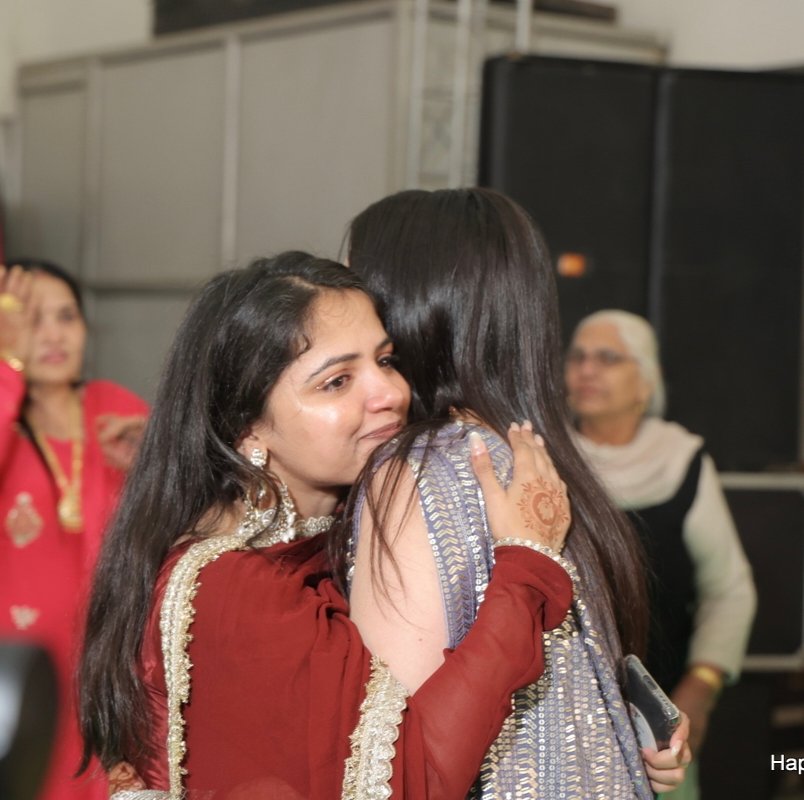
The Expectations Women Carry
Many of you might wonder what made me say that to Kajal. After all, marriage is a happy occasion, the union of two people who promise to spend their lives together, sharing joy and standing by each other in difficult times. Yes, marriage is all of that, a partnership built on love and companionship.
But as I have grown older, I have also started seeing another side of it.
For a woman, marriage often means leaving behind the home that has been her comfort place since childhood and starting life from scratch in a completely new environment. Almost overnight, everything changes. Her home changes. Her surname changes. Sometimes even her identity begins to shift. She enters a new family carrying the quiet burden of expectations, of proving that she is a “good” bahu. She is expected to be responsible, soft-spoken, well-mannered, skilled in household work, and ready to adjust to the ways of a family she has just entered. What strikes me most is how naturally these expectations are placed on women, while very little is expected from men in comparison. A woman’s title changes from Ms. to Mrs., marking her transition into marriage, while a man remains simply Mr., unchanged. Slowly, I began to realise that the institution of marriage itself has been shaped by patriarchal ideas. And what makes it more complicated is that this system is often carried forward not only by men, but also by women within the family. When a saas expects her bahu to follow certain rules simply because she once had to follow them herself, the cycle quietly continues.
In many families, a bahu cannot even visit her own parents freely. A simple visit often requires the approval of the in-laws. Sometimes, even her parents hesitate to ask her to come home for a few days without checking if it would be “okay” there. When you pause to think about it, it feels strange. The home where she grew up slowly becomes a place she must seek permission to return to. The right to live with dignity and make choices exists in our laws, but in everyday life, those freedoms often become fragile. Traditions, expectations, and social pressure quietly decide what a woman should or should not do. A few weeks ago, I heard one of the uncles proudly talking about his daughter-in-law. He said with great pride that she had left her job to take care of the house and her son. If that was a decision she truly wanted to make, then of course it is completely valid. But what stayed with me was the way he spoke about it, as if that was the only respectable choice she could have made. I kept wondering what the reaction would have been if she had chosen her career instead. Would the same pride still exist? Or would she have been judged for not being an “ideal” bahu? In many ways, becoming a bahu in our society often means learning to shrink parts of yourself to fit into expectations. Many women I know have quietly told me that they never fully feel at home in their in-laws’ house. They feel watched, measured, and sometimes misunderstood. The freedom to simply be themselves often feels limited. What makes it even harder is when their partners fail to recognise what they are going through. Even today, many men grow up believing that a woman leaving her home after marriage is normal and not something worth questioning. After all, their mothers did the same. Their grandmothers did the same. And instead of questioning the sacrifices those women made, society often glorifies their silent endurance.
Hope, Change, the future we deserve
At the same time, I know that this is not everyone’s story. Society is changing, even if the pace of that change often feels slow. I have seen small but meaningful examples of this shift around me. One of my close friends also got married in November. Both she and her husband work in the same city, and instead of expecting her to move to his family home, he chose to move in with her. They quietly stepped away from the long-standing assumption that it is always the woman who must leave her home. Another childhood friend, Sahil, constantly surprises me with the way he treats his wife. They both work, and they share the responsibilities of raising their daughter equally. Parenting, in their home, is not seen as the mother’s duty alone but as something both partners participate in with equal care. Moments like these remind me that change is possible. Indian society is slowly evolving. But the pace of that change is still uneven. Alongside these hopeful stories, we continue to hear about dowry deaths, broken marriages over financial demands, and women facing violence within their homes. What troubles me even more is the way society reacts. When a woman harms a man in a marriage, the entire system suddenly finds its voice. Outrage spreads quickly, and everyone seems eager to talk about it. But for years, women have faced violence, humiliation, and even death within marriages, and much of society has remained silent. The outrage often appears only when the existing power balance is shaken.
Change is necessary, and perhaps it can begin with our generation. But real change rarely starts with big declarations; it begins quietly, within our own homes. I have seen small signs of this change around me. My father, for example, has slowly started to understand that a woman’s place is not always in the kitchen when guests are visiting. He now tells my mother to sit with everyone, to enjoy the conversation, to have her cup of chai peacefully instead of worrying about serving everyone else. It may seem like a small shift, but moments like these quietly challenge years of conditioning. If you are a man reading this, make sure that your wife truly feels at home in your home. That she has the space to be herself, to speak freely, to breathe without constantly worrying about whether she is meeting someone’s expectations. And if you are a woman reading this, don’t forget your worth. Marriage should never require you to abandon who you are.
It is a long road ahead. That is why, when I looked at Kajal a few months before her wedding, I told her, “You are doing a brave thing.” Not because she was getting married, but because she was stepping into a system that demands courage from women every single day. Courage to leave what is familiar, courage to adjust without losing oneself, courage to carry love, expectations, and unspoken pressures all at once. What we often celebrate as tradition is, for many women, an act of quiet bravery. And until marriage becomes a partnership of equals, not a test of a woman’s endurance, I will continue to believe that every woman who chooses to walk this path is doing something incredibly brave.
So emotional and hearttouching 💞💞🥹
Truly felt every word ❤️🥺
Deeply emotional and beautifully expressed ❤️
So well articulated!! 🥺
❤️ ❤️ 💙 💜
Such a warm and genuine piece communicated from your heart 🤌🏼❤️
beautifully explained and expressed this topic of bravery, courage and sacrifice of all the womens in our society..
Reading this felt like you gave voice to the heart of every woman. Writing about such deep emotions takes courage, and you expressed them beautifully. Thank you, Shallu, for sharing such an incredible and powerful piece♥️
Love the way you curate the complexity so simply.
Beautifully crafted… The multi-“-layered way of your writing presents a understanding of mariage as patriarchal institution and a emotional decision experienced by women. The ending gives the ‘hope’ that institutions can evolve into more equal places for both genders, with our little efforts.
Congratulations on your work!
So well articulated, every word conveyed a beautiful emotion. You’re truly perfect at whatever you do ❤️
heartwarming ❤️
The fact that we Women are getting aware about the marriage institution and it’s functionality, itself gives me hope. We have come far way and a long way to go, let’s keep smashing the patriarchy together and in the quest keep living a little more🫶🏻❤️
You are absolutely right about how women have to shift and leave as if their own life before never mattered. Also how new generation are shifting ways of how marriage should work. I would like to add on the internal shocks many women face if both cultural even in love marriage are different. Some of them are unable to adjust while the new culture they are adapting often reject them. Thankyou for writing with lived examples hope to read your more work soon💕
Beautifully narrated.
Beautifully written 👏🏻💗
Love🫶🏻
Beautiful and well written❤️
The way you’ve explained it all 💯
So so beautiful ✨
The content, articulation, vocabulary and presentation 😍❤️
Everything seems so perfect! 👍
Beautiful blend of personal memories with thoughtful reflections on marriage and society. 👏🏻👏🏻
So so beautiful 🌻🙌🌻
So beautifully put together, Shallu! ❤️✨
Nobody could have articulated the complexities of these emotions better ❤️
I just read this and it honestly touched me. I recently got married, and while weddings are beautiful and full of happiness, there are so many emotions behind them that people don’t always see.
Reading this made me think about my own journey and the little shifts that come with it. The way you’ve written about sisterhood, leaving home, and the quiet courage women carry felt very real. Thank you for putting these feelings into such honest words.
Such a heartfelt read. It feels like the story of so many girls—honestly nobody could have articulated these emotions better❤️
The way I had to stop tears from rolling down my face. Shallu, what an amazingly expressive article this is and how beautifully you have narrated the experience of being a bride and a bride’s sister/family.
heart touching❤️❤️❤️
This is so beautiful and heartfelt! 🥺❤️
Reading your words felt like so overwhelming, literally it felt like I am watching my wedding album all over again. Marriage is all about cherish the other person’s difference rather than seeking perfection (to be a good Bahu) .
Stepping out of Miss and into life of Mrs. — The Journey couldn’t find better words than this .
More love to you 🫶🏻
My heart is so full after reading this ❤️
I know that no words could ever do justice to explain how amazed I am after reading this. Putting such complex emotions into simple words. The world needed to hear this. Thank you Shallu Di!
Beautifully thought out piece which resonates with women of all ages and backgrounds. 💖💌
Hey, I just read your blog and it’s honestly so beautiful. The emotions felt really real and deep.🥺❤️
Beautifully written… your layered narrative captures both the reality of marriage as a patriarchal institution and the deeply emotional journey women experience within it. The ending leaves us with a sense of hope—that with small, conscious efforts, these institutions can evolve into more equal and compassionate spaces for everyone.
I’m glad that you write on such a thoughtful and impactful piece!
The systems are rigid and requires sacrifices, but what is really interesting, women are the only one sacrificing or are at least expected to sustain the systems created by men. You’re right, change is visible but in the change itself, women are sacrificing more. After LPG, when women entered public spaces, the burden doubled on them, burden of performing household chores, taking care of children along with pursuing their dreams, which is clearly visible. What is really required is rethinking of the institution of marriage. As you mentioned, which must be based on equality and not just sacrifices of women. Same rules can’t be applied to changed situations. But to be very honest, I really loved the piece of writing, you very well articulated this through your personal experiences. Really touched how you articulated the hidden emotions, which are very loud but unnoticeable, which haunts and traumatises some and brings joy to others. Keep posting